
Psychology Studies
The science behind the analysis
Pantheon reads every ad through behavioural science. It recognises the persuasion mechanisms the ad uses, the awareness level of the audience it speaks to and the cognitive biases it leans on. Then it tells you which of them fit your offer.
On this page you find the vocabulary the analysis uses and the research behind it. We cite studies that have held up to replication, and we say which famous ones we leave out.
1. The 22 persuasion mechanisms Pantheon recognises
Every ad in Pantheon gets from 0 to 3 mechanisms, taken from a closed list of 22. A closed list means two ads that pull the same lever get the same label, so you can compare pages, niches and markets.
- Before / after
- Testimonials
- Authority
- Social proof in numbers
- Scarcity
- Urgency
- Free value
- Challenge
- Myth busting
- Common enemy
- Founder story
- Demonstration
- Comparison
- Risk reversal
- Price anchoring
- Quiz
- Problem-agitation
- Curiosity
- Identity
- Exclusivity
- Fear of missing out
- Emotional story
The same list describes your offer. From your Offer Brief and your client avatar, Pantheon picks the 5 mechanisms that would sell it best and looks for pages in other industries that already use them. It transfers the mechanism: it never copies the ad.
What you see in the Meta Ad Library
Active
Library ID: 2028429204598914
Started running on Nov 13, 2025
5 ads use this creative and text
See ad detailsMultimalin
Sponsored
🎇 En Finir avec le Cauchemar des Tables de Multiplication avec Multimalin ! 🎇 🎨 Multimalin transforme l'apprentissage en une expérience ludique et enrichissante, en utilisant des histoires et des personnages animés pour mémoriser les tables de multiplication ! 🎨 👀 Regardez la vidéo et laissez David, orthophoniste spécialisé, vous guider à travers les avantages et les succès de Multimalin ! ==> https://multimalin.com/fr/offre-speciale-facebook-et-youtube/85-la-formule-complete-avec-dvd-des-animations-videos.html
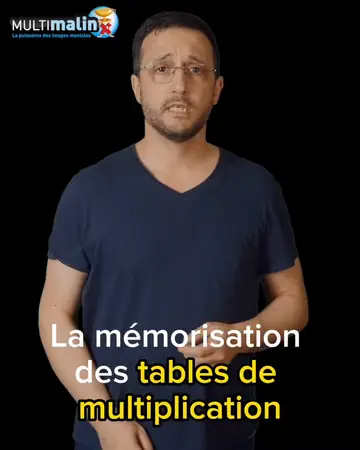
MULTIMALIN.COM
Cet Orthophoniste Recommande Multimalin pour un Apprentissage Ludique et Efficace !
What Pantheon sees
Awareness
Solution Aware
Persuasion mechanisms (3 of 22)
Psychological triggers
- Landing page coherence
- 95/100
- Active for
- 335 days
- Real EU reach
- 2.1M
- Belgium, Luxembourg, France
- Who sees it
- 80% women · 58% aged 35-44
- Estimated spend
- ~$3,638
- from $1,654 to $8,269
- Website traffic
- 11.3K visits a month
Pantheon checked it was still active on Oct 14, 2026
2. Theoretical foundations of the analysis
Heuristics and biases: Kahneman & Tversky
The decision analysis model comes from the "Heuristics and Biases" research program.
In 1974, Amos Tversky and Daniel Kahneman published "Judgment under Uncertainty: Heuristics and Biases" in Science. They demonstrated that humans are not rational statistical calculators: they use mental shortcuts (heuristics) that, while efficient, lead to systematic and predictable errors.
An ad rarely convinces through logic. It works when it offers the right shortcut: a vivid, recent example (the availability heuristic) or a familiar picture of the ideal client (the representativeness heuristic). The analysis names the shortcut an ad relies on.
Memory is reconstructive: Loftus & Palmer
How you frame your offer changes what the customer remembers about your product.
In 1974, Elizabeth Loftus demonstrated that changing a single word in a question alters eyewitness memory. Subjects asked how fast the cars were going when they "smashed" estimated higher speeds and falsely remembered broken glass compared to those who heard the word "hit."
Copy works the same way. A single verb or frame changes how the reader perceives the value of your offer. That is why Pantheon looks at the exact words of an ad, not only at its topic.
Cognitive dissonance: Festinger & Carlsmith
In 1959, Leon Festinger demonstrated that people have an innate need for consistency between their actions and beliefs. When they act contrary to their convictions for an insignificant reward (1 dollar), they change their beliefs to justify the action and reduce discomfort (dissonance).
The need for consistency explains the mechanisms built on a small first step: a free guide, a quiz, a 5-day challenge. Once someone has said yes to something small, saying yes to the next step feels consistent with who they are.
3. Heuristics are not always errors
We also follow Gerd Gigerenzer's school of thought, which views heuristics as "fast and frugal" tools that often outperform complex rational calculations in uncertain environments.
The less-is-more effect: with less information people sometimes decide better, because they avoid overfitting to the past. In an ad, one clear promise often does more than a list of ten benefits.
4. Glossary of biases found in ads (selection)
When you run a persuasion analysis, Pantheon names the biases the ad already uses, each with the sentence that proves it, and the ones missing for your client avatar. Here are some of them, with their source.
- Anchoring. The tendency to rely too heavily on the first piece of information offered (such as a crossed-out initial price) when making subsequent decisions. Tversky & Kahneman, 1974.
- Confirmation bias. The tendency to search for and interpret information in ways that confirm existing beliefs. An ad that starts from what the reader already believes meets less resistance.
- Halo effect. The perception of a single positive quality (e.g., polished design) influences the overall assessment of company reliability. Nisbett & Wilson, 1977.
- Social proof and conformity. In Solomon Asch's experiments, participants went along with an obviously wrong answer backed by the majority on 36.8% of the critical trials. It is the reason testimonials and client numbers persuade.
- Framing effect. Decisions depend on how options are presented (e.g., "90% fat-free" vs "10% fat"). Tversky & Kahneman, 1981.
- Fundamental attribution error. The tendency to overestimate personality and underestimate the situation when judging others, and to blame ourselves ("I'm not disciplined enough") for a failure the method caused. Ads built on a common enemy use it by moving the blame to the method.
- Sunk cost fallacy. The tendency to continue an action only because resources (time, money) have already been invested, even when it is no longer advantageous.
5. Scientific rigour: the replication crisis
Not every famous study holds up. The Open Science Collaboration (2015) repeated 100 published psychology studies: only about 36% produced a significant result again.
Studies this page leaves out or treats with caution:
- Marshmallow Test. Mischel's original studies linked the ability to delay gratification to later success. Watts et al. (2018) found that the link shrinks sharply once family background and early abilities are taken into account.
- Stanford Prison Experiment. It has been widely criticised: recordings show that Zimbardo and his assistants told the guards how to behave (Le Texier, 2019). Pantheon looks at real ads that advertisers keep paying for, not at staged simulations.
- Implicit Association Test. It has shown validity and reliability problems in predicting real behaviors. Oswald et al., 2013.
6. How Pantheon's persuasion analysis works
The analysis runs in three steps. First, it lists the biases and triggers the ad already uses, each with the sentence that proves it. Then it searches a behavioural-science knowledge base for the ones that are missing, starting from the pains, desires and objections of your client avatar. Finally, it suggests how to rewrite the ad to add them.
It doesn't promise results: no analysis replaces a test on your audience. It gives you a reason to test one version rather than another.
7. What the ads that survive use
We looked at the 849 ads from course creators, educators and service businesses that had been running for more than 90 days in Pantheon's library (extraction of 23 October 2026). 769 of them have their mechanisms classified.
| Mechanism | Share of surviving ads |
|---|---|
| Identity | 37.6% |
| Free value | 32.9% |
| Problem-agitation | 30.6% |
| Authority | 22.8% |
| Curiosity | 18.6% |
| Myth busting | 11.7% |
| Comparison | 8.6% |
| Social proof in numbers | 8.5% |
| Before / after | 8.1% |
| Price anchoring | 6.1% |
| Scarcity | 5.7% |
| Urgency | 5.6% |
Identity, free value and problem-agitation lead. Scarcity and urgency appear in fewer than 1 surviving ad in 17: the levers that last are the ones that speak to who the reader wants to become, not the countdowns.
Method: these ads entered Pantheon through keyword searches with a minimum-duration filter and through manual curation, so they describe what surviving ads look like, not how many ads survive. One ad can use several mechanisms, so the shares don't add up to 100%.
How to find surviving ads yourself in Meta's library: our Meta Ads Library guide.